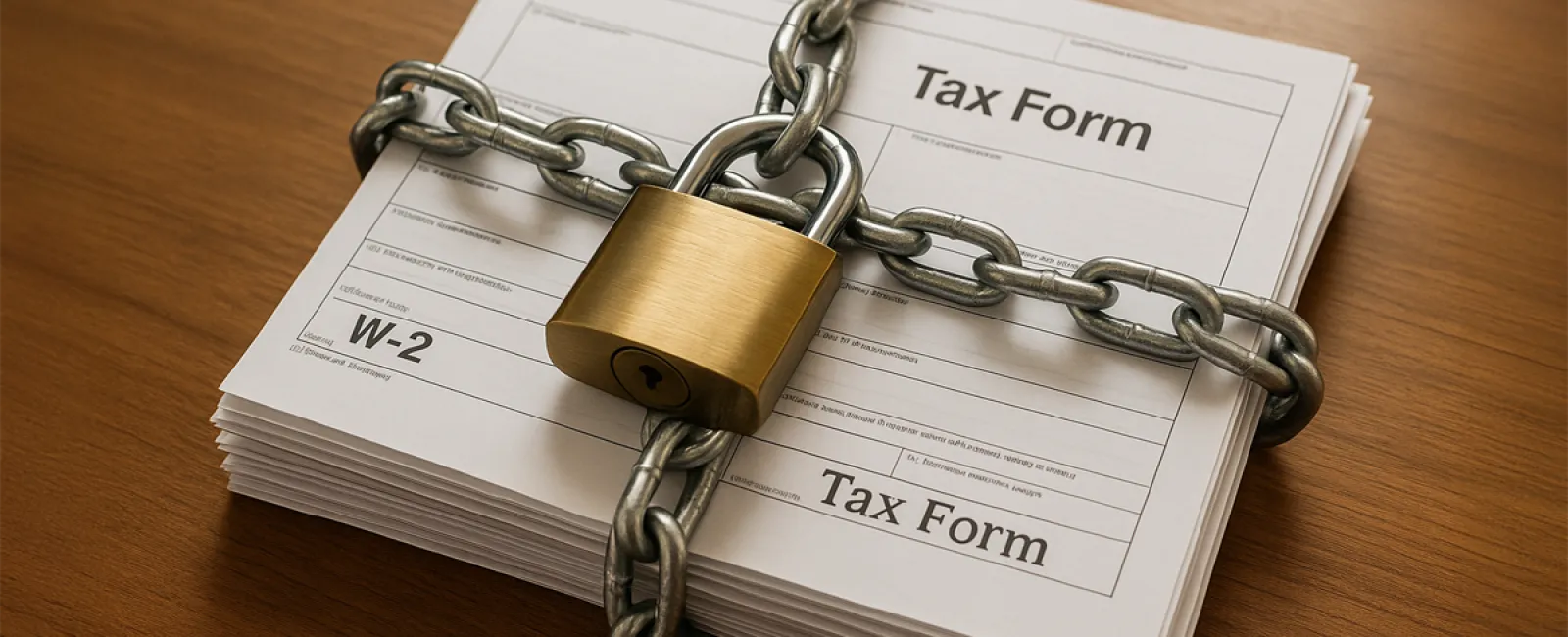
It's February — the heart of tax season. Your accountant is under pressure, your bookkeeper is gathering paperwork, and everyone's focused on W-2s, 1099s, and looming deadlines.
But here's a reality that doesn't get marked on calendars: the first major tax-season headache isn't a tax form. It's a scam.
One particularly dangerous scam emerges early, often before April, targeting small businesses with a believable and straightforward approach. It could already be sitting unnoticed in someone's inbox at your company.
Understanding the W-2 Scam: The Mechanics
The scenario unfolds like this:
An employee in charge of payroll or HR receives an email that appears to come from the CEO, owner, or a high-ranking executive.
The email is brief and urgent:
"I need copies of all employee W-2 forms for an upcoming accountant meeting. Can you send these right away? I'm swamped today."
The message sounds authentic. The tone is urgent but reasonable, reflecting the busyness of tax season. The request seems typical.
The employee complies and sends the W-2s.
But, in reality, the email wasn't from the CEO. It was crafted by a criminal using a spoofed email address or a deceptive domain.
That criminal now possesses every employee's:
• Full legal name
• Social Security number
• Home address
• Salary details
All the essential information needed to commit identity theft or to submit fraudulent tax returns ahead of your employees.
The Aftermath: What You Can Expect
Typically, the victim discovers the fraud when their tax filing is rejected with a message such as: "Return already filed for this Social Security number."
Someone else has already filed a tax return in their name, claimed the refund, and received the money.
Your employee then faces a daunting process involving the IRS, credit monitoring services, identity theft protection, and extensive paperwork — all triggered by an email they never should have trusted.
Now multiply that risk across your entire payroll. Imagine the challenge of assuring your staff their personal data was compromised because of a phishing scam.
This scenario isn't just a cybersecurity issue — it damages trust, creates HR nightmares, exposes your business to lawsuits, and harms your reputation.
Why This Scam Is So Effective
This isn't some poorly disguised scam email. It's convincing because:
The timing is flawless. Requests for W-2 forms are normal in February. No one finds it suspicious.
The request itself is plausible — unlike scams asking for wire transfers or gift cards, it involves actual documents that are routinely shared during tax season.
The urgency seems normal, reflecting a real busy workday.
The sender's identity appears legitimate. Cybercriminals research their targets thoroughly, often using accurate executive names or your accountant's details.
Employees want to be helpful, especially to leadership, which often leads to bypassing verification in favor of speed.
How to Shield Your Business Before the Scam Hits
The positive news is this scam is preventable — more through smart policies and company culture than expensive technology.
Implement a strict "No W-2 forms sent via email" policy. No exceptions. Sensitive payroll documents should never leave your premises through email attachments. If requests come via email, deny them outright — even if the email looks like it's from your CEO.
Always verify sensitive requests through a separate communication channel — a phone call, in-person conversation, or company chat — never by replying to the suspicious email. Use pre-existing contact information, not details from the suspicious message. A quick verification can prevent months of recovery.
Hold a concise 10-minute training with your payroll and HR teams promptly. Emphasize the surge in these scams, what they look like, and your response protocols. This awareness is invaluable protection.
Secure your payroll and HR systems with multi-factor authentication (MFA) on all employee data access points. In cases of credential compromise, MFA can block unauthorized entry.
Create a culture where verification is encouraged, not seen as distrust. Praise employees who verify requests — they're your first line of defense.
These five straightforward rules are quick to put into action and powerful enough to stop the initial wave of scams.
The Wider Threat Landscape
The W-2 scam is just the beginning.
Expect a barrage of tax-related attacks between now and April, including:
• Fake IRS notices demanding immediate payment
• Phishing messages disguised as updates for tax software
• Spoofed emails impersonating your accountant with malicious links
• Fraudulent invoices timed to appear as genuine tax expenses
Cybercriminals exploit tax season's rushed environment, where financial requests seem routine.
Businesses that navigate tax season without incident aren't lucky; they're prepared with established policies, employee training, and systems that spot suspicious activity before it causes harm.
Is Your Business Prepared?
If your policies are solid and your team knows what to watch for, you're ahead of the curve compared to many small businesses.
If not, there's no better time than now to act — before the first scam threatens your company.
Consider scheduling a complimentary 15-minute Tax Season Security Check.
We'll help you review:
• Payroll and HR system access controls and MFA
• Your criteria for verifying W-2 requests
• Email protection strategies against spoofing
• The critical policy adjustment many businesses overlook
If your company already has safeguards in place, fantastic. But if not, feel free to share this with another business owner who could benefit — it could save them from a costly crisis.
Click here or give us a call at 877-622-7911 to schedule your free 15-Minute Discovery Call.
Because tax season is challenging enough without adding identity theft to the mix.